


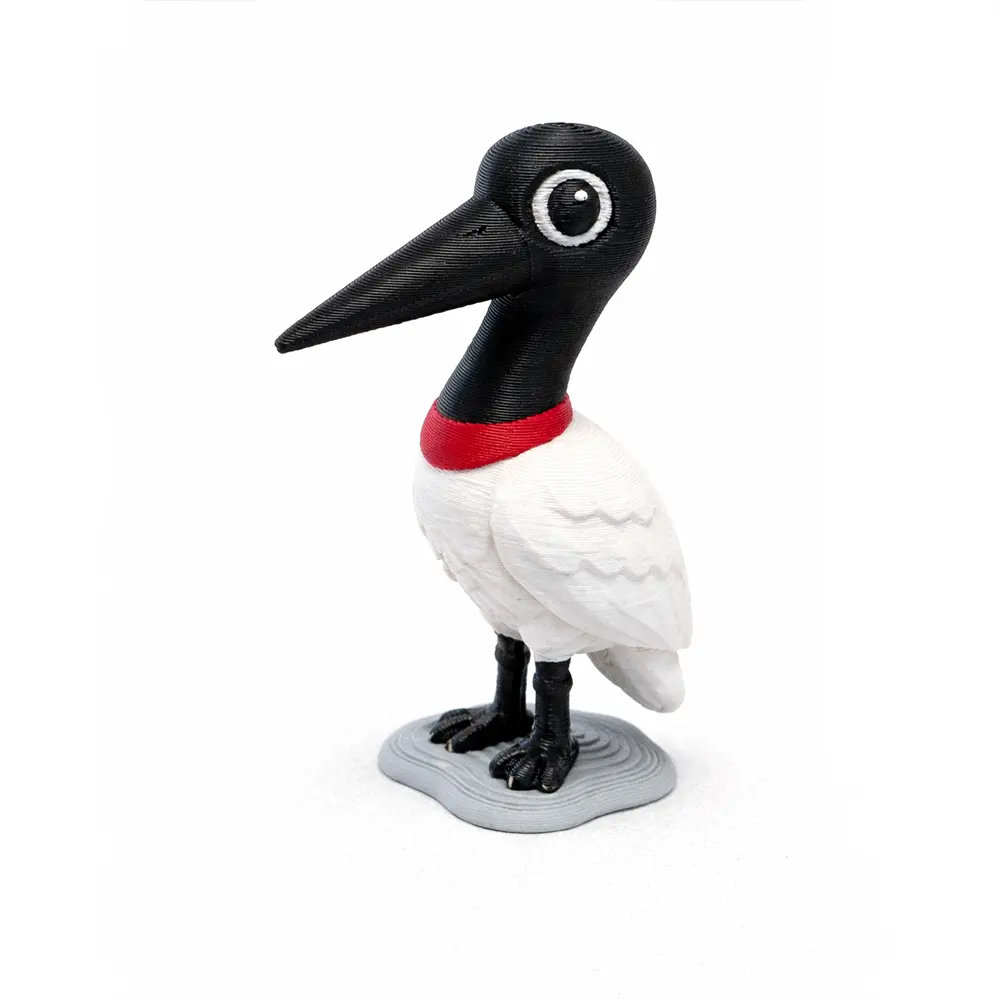
Winged majesty: discover the impressive biological design behind the Jabiru stork, the giant sovereign bird of the wetlands.
If there is one image that captures the epic scale of the Pantanal landscapes, it is the silhouette of a Jabiru stork (Jabiru mycteria) standing atop its monumental nest. This prehistoric-looking wading bird is the official symbol of the biome and a vital biological indicator of local environmental health.
- A massive wingspan of up to 2.60 meters.
- Elastic neck pouch used for thermoregulation.
- Permanent nests used by multiple generations.
- Smaller wingspan, averaging around 1.50 meters.
- Completely featherless, with a dark head and neck.
- Hunts in highly dense social colonies.
Giant Anatomy and Hunting Tactics
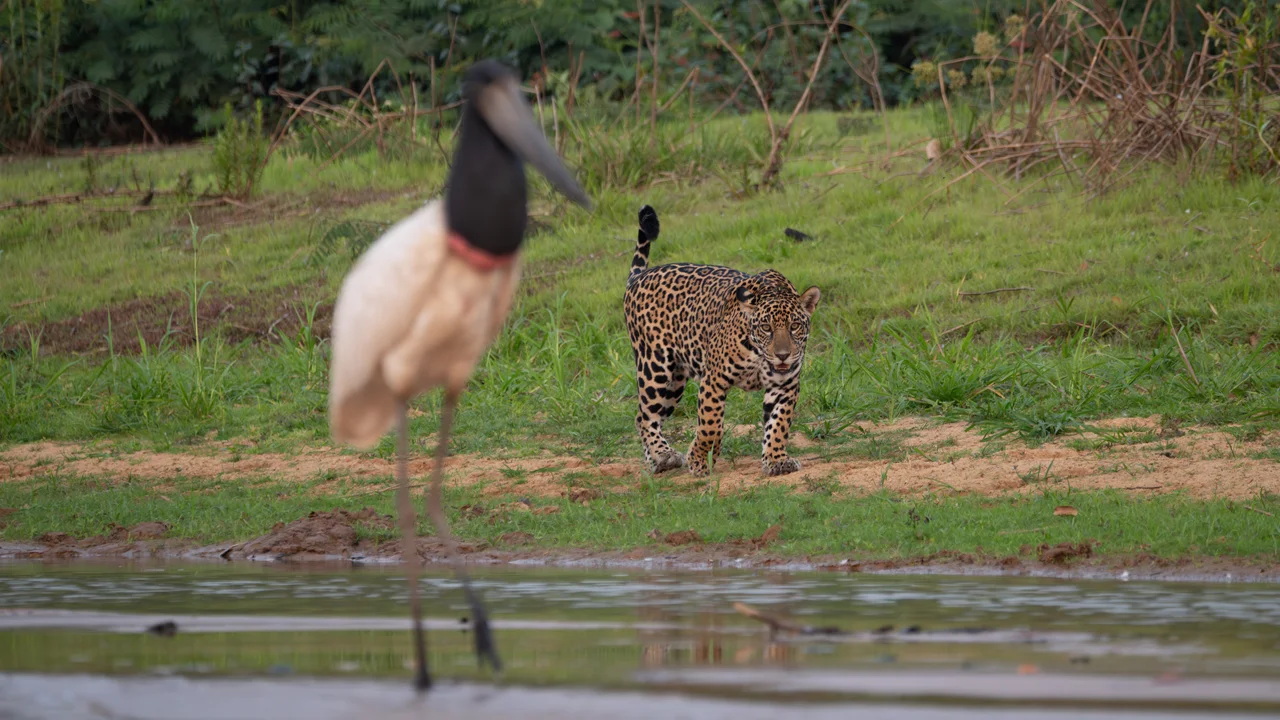
The Jabiru is visually stunning, often exceeding 1.40 meters in height. Its long, heavy black bill, slightly upturned at the tip, is a precise tool for catching fish, mollusks, and amphibians in shallow waters. During the seasonal dry periods, they patrol receding lagoons, often feeding on common wetland species such as the piranha, keeping aquatic populations in perfect balance.
The Largest Nests in South America
The breeding architecture of the Jabiru is an engineering marvel. They build their nests in the crowns of the tallest trees, such as native trumpet trees and mandateiros. Made of thick branches and lined with leaves, these structures are expanded year after year by the same monogamous pair. Scientific reports monitored by ICMBio These structures can exceed 1.5 meters in diameter, becoming so solid that they later provide shelter for smaller bird species and mammals.
The Red Pouch and Social Behavior
The distinct bright red band at the base of the neck is not merely decorative. It is a patch of featherless, highly vascularized skin that inflates when the bird is excited or needs to dissipate heat during the scorching Pantanal days. When parents return to the nest, they perform a ritualistic bill-clattering dance, a rhythmic sound echoing across the savanna that reinforces their family bond.
💡 Safari Wisdom
Jabiru chicks are born with soft, fluffy white feathers that darken to a grayish hue before they reach full maturity. On our wildlife photo safaris, watching these massive active nesting sites between July and October stands out as one of the most rewarding experiences of the trip.
How to visit the Pantanal?
Yara Eco Safari offers tours dedicated to exploring the Pantanal, focusing on the ethical observation of species in their natural habitat.
Our team combines in-depth knowledge of lowland wetlands with top-notch eco-safari logistics to ensure your comfort and safety throughout the entire journey.
Choose your exclusive itinerary: