



A jaguar (Panthera onca) is more than a feline; it is the symbol of the power and exuberance of the Pantanal. For travelers looking for a complete immersion in South American nature, spotting it is the highlight of the expedition.
In our eco-safari, We combine scientific knowledge with premium experience, guaranteeing an adventure that is as educational as it is unforgettable. We invite you to learn about the characteristics and habits that make the jaguar the true queen of its habitat.
A portrait of the great American cat
The jaguar is the largest feline in the Americas. Its physical characteristics are perfect adaptations for survival in the mosaic of rivers and Pantanal forests.
1. The Coat and Its Rosettes
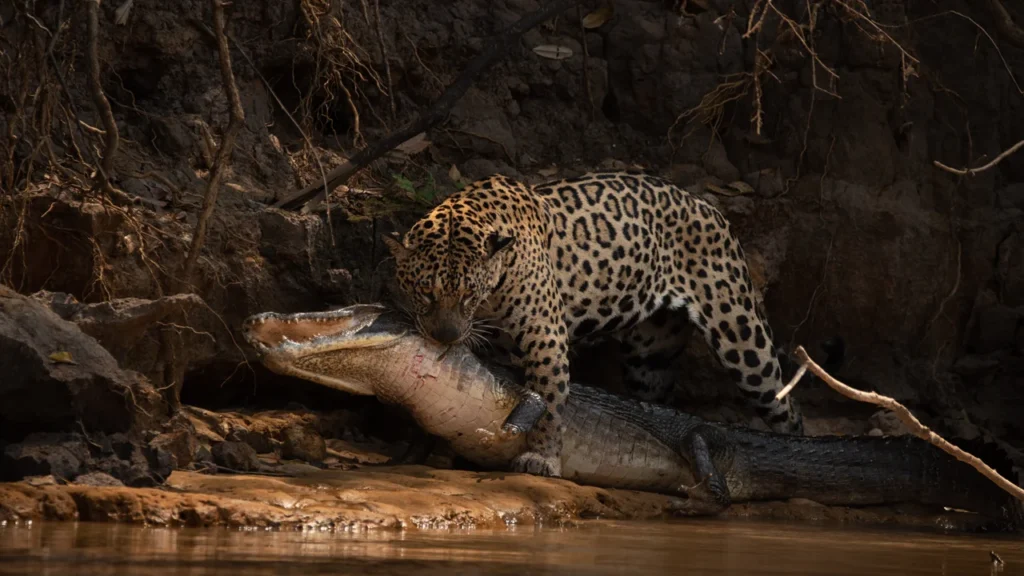
The most distinctive feature is its golden coat with rosettes. Unlike the leopard, the jaguar's rosettes are ringed and have internal spots. This pattern provides impeccable camouflage and acts as a “fingerprint”, allowing guides and researchers to identify each individual.
Scientific Curiosity: The black jaguar (melanistic) also has rosettes, but they are only visible under specific lighting, camouflaged by the high concentration of melanin.
2. Structure and Strength
The jaguar's body is robust, compact and extremely muscular. With relatively short legs and a large head, this structure gives it immense strength. In the Pantanal, where there is an abundance of prey, adult males can reach considerable weights, reinforcing their dominance.
3. The most powerful bite
What really sets it apart is the strength of its bite - the most powerful of all felines in relation to its size. This adaptation allows it to pierce the skull of its prey, an efficient hunting tactic that allows it to prey on species with shells, such as alligators e armadillos.
Habits in the heart of the Pantanal
The Pantanal is the ideal habitat, offering a vast source of food. This is where their habits are most fascinating and where observation is most likely.
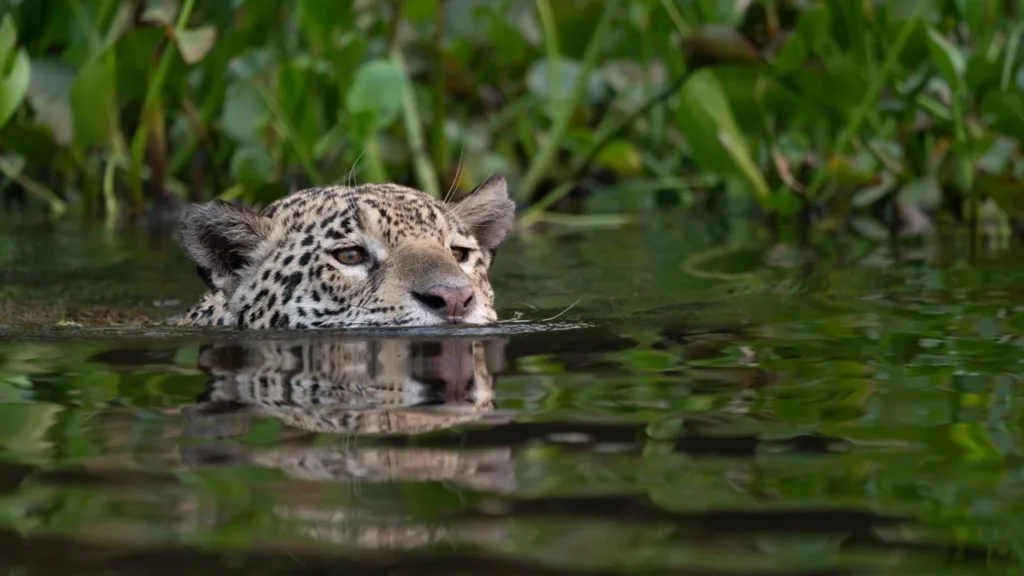
1. Solitary and Aquatic
The jaguar is typically solitary and highly territorial.
Crucially, it is an excellent swimmer, moving easily between rivers and streams. This adaptation is fundamental, as it allows it to hunt aquatic prey and use the waterways as travel routes - and it is on the banks that the observations are concentrated.
2. Opportunistic hunter
Its habits tend to be crepuscular and nocturnal. However, in preserved areas of the Pantanal, such as those close to our ecosafari, it is increasingly common to see them hunting or resting in daylight. Its diet is wide-ranging, including more than 80 species, which demonstrates its ecological flexibility as a top predator.
How do I see the jaguar in its natural habitat?
Yara eco-safari has tours dedicated to exploring the fauna and flora of the Pantanal, and of course the jaguar is one of the stars of the safari
Our team combines in-depth knowledge of the feline's habits with the logistics of a high-standard eco-safari. We ensure that observation is ethical and effective, without disturbing wildlife. From planning the best river routes to relaxing in the best comfort and safety.
Yara has specific packages for jaguar sightings, below are 3 options:
Jaguar express safari - 4-day tour
Jaguar essential safari - 5 days of sightseeing
Jaguar immersive safari - 6 days of sightseeing
The majesty of the jaguar awaits you. Book your experience.