


Wenn es in Brasilien einen Ort gibt, an dem die Natur noch immer ihre ganze Kraft entfaltet, dann ist es der Pantanal. Dieses Universum aus Düften, Klängen und Wasserkreisläufen zieht jeden Besucher in seinen Bann. Das Verständnis seiner wilden Logik und der Dynamik seiner Gewässer ist für die Menschheit fast schon eine Lektion in Demut.
In diesem umfassenden Leitfaden von Yara Ökosafari, werden wir das Herzstück dieses faszinierenden Bioms erkunden. Wir werden die Möglichkeiten für nachhaltigen Ökotourismus und die Herausforderungen im Naturschutz beleuchten und aufzeigen, warum dies das beste Reiseziel in Amerika für die Beobachtung von Wildtieren ist.

Wo liegt das brasilianische Pantanal?
Entgegen der landläufigen Meinung ist die Pantanal ist nicht einfach nur ein durchgehender Sumpf, sondern vielmehr eine überflutete Steppensavanne. Laut offiziellen brasilianischen geografischen Daten, die in SciELO, die Region erstreckt sich über eine riesige Fläche von 147.574 bis 150.355 km².
Der größte Teil des Gebiets erstreckt sich über die Bundesstaaten Mato Grosso (nördliches Pantanal) und Mato Grosso do Sul (südliches Pantanal) und umfasst zudem Randgebiete in Bolivien und Paraguay. Diese weitläufige Ebene mit sandigen Böden beherbergt eine robuste Vegetation und verändert sich saisonal durch das Überlaufen des Paraguay-Flusses und seiner Nebenflüsse.
Die Vielfalt der Ökosysteme des Pantanal
Eine Reise durch diese Ebene führt durch verschiedene “Teilregionen”. Die Topografie bestimmt, wo sich Wasser ansammelt, und schafft so eindrucksvolle visuelle Mosaike:
- Auwälder: Galerie: Auwälder entlang der Flüsse, die als Lebensraum für Wildtiere von entscheidender Bedeutung sind.
- Überschwemmungsgebiete: Ebenen, die während der Hochwasserzeit überflutet werden und von Wasserpflanzen dominiert werden.
- Gebirgszüge und Capões: Höher gelegene Landstreifen, die nicht überflutet werden und bei Hochwasser als lebenswichtige Rückzugsgebiete an Land dienen.
- Buchten und Salinen: Senken, in denen sich nährstoffreiche und fischreiche Seen bilden.
Fauna des Pantanals: Das größte Naturschauspiel
Eine Reise ins Pantanal garantiert eine Begegnung aus nächster Nähe mit einer der größten Tierkonzentrationen der Welt. Laut ICMBio Nach aktuellem Stand beherbergt das Oberparaguay-Becken über 650 Vogelarten, 102 Säugetierarten, 177 Reptilienarten und fast 300 Fischarten.
Die bekanntesten Tiere des Bioms
Die Fülle an Nahrung und die offene Landschaft erleichtern die Beobachtung von Arten, die in dichten Wäldern wie dem Amazonas-Regenwald unmöglich zu entdecken wären. Zu den Höhepunkten zählen:
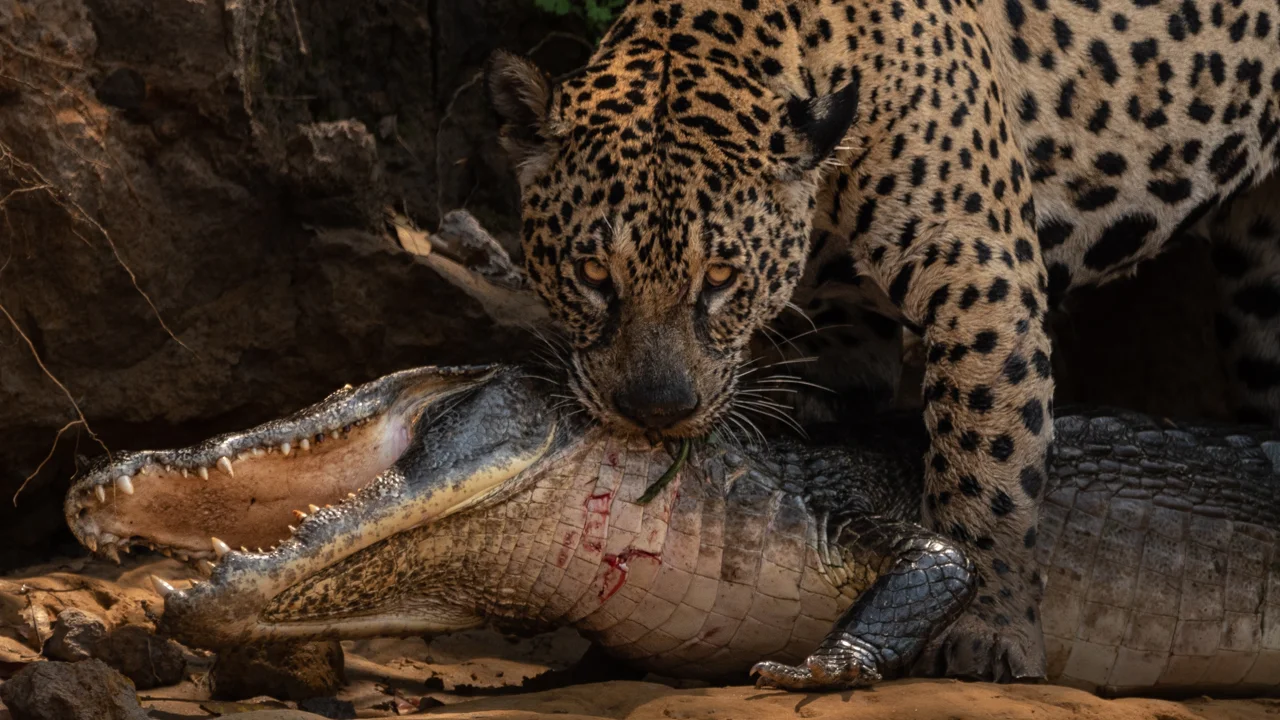
- Jaguar: Das Spitzenraubtier Amerikas. Im nördlichen Pantanal lebt die weltweit höchste Population dieser majestätischen Raubkatze. Lesen Sie mehr dazu in unserem Vergleich der Großkatzen.
- Jabiru-Storch (Tuiuiú): Der Symbolvogel der Region, der monumentale Nester in den Baumkronen der Piúva-Bäume baut.
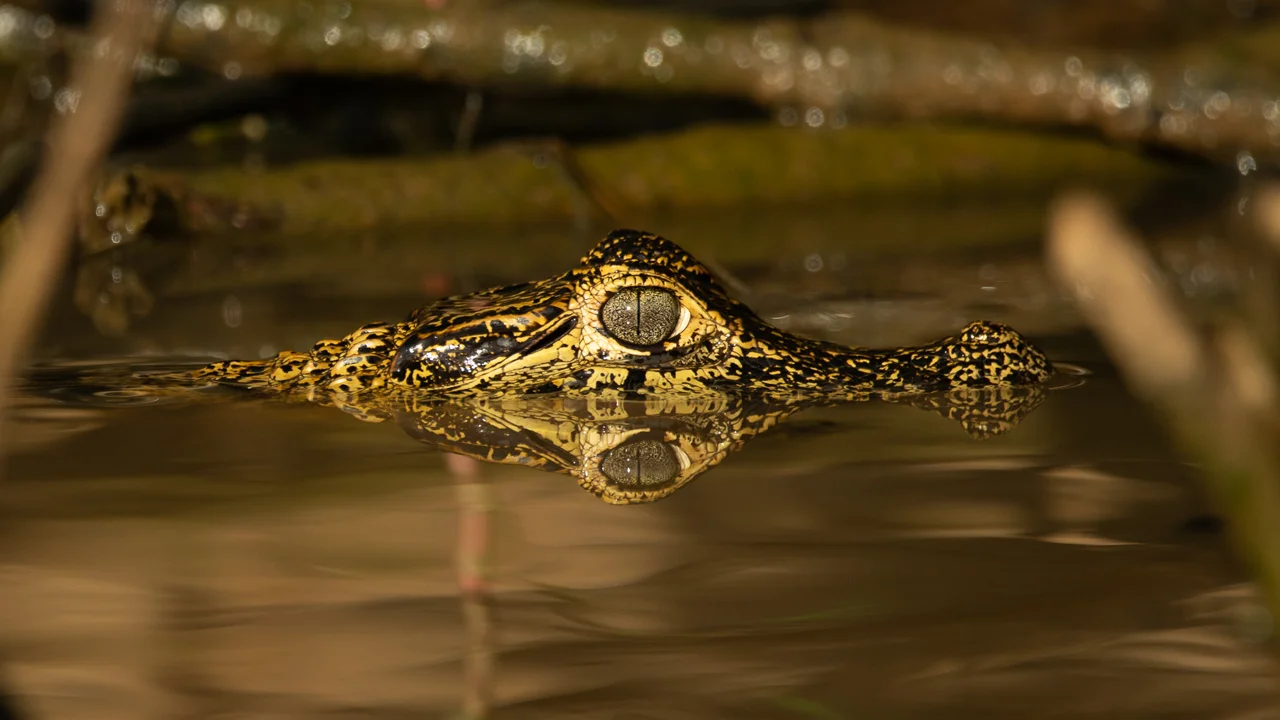
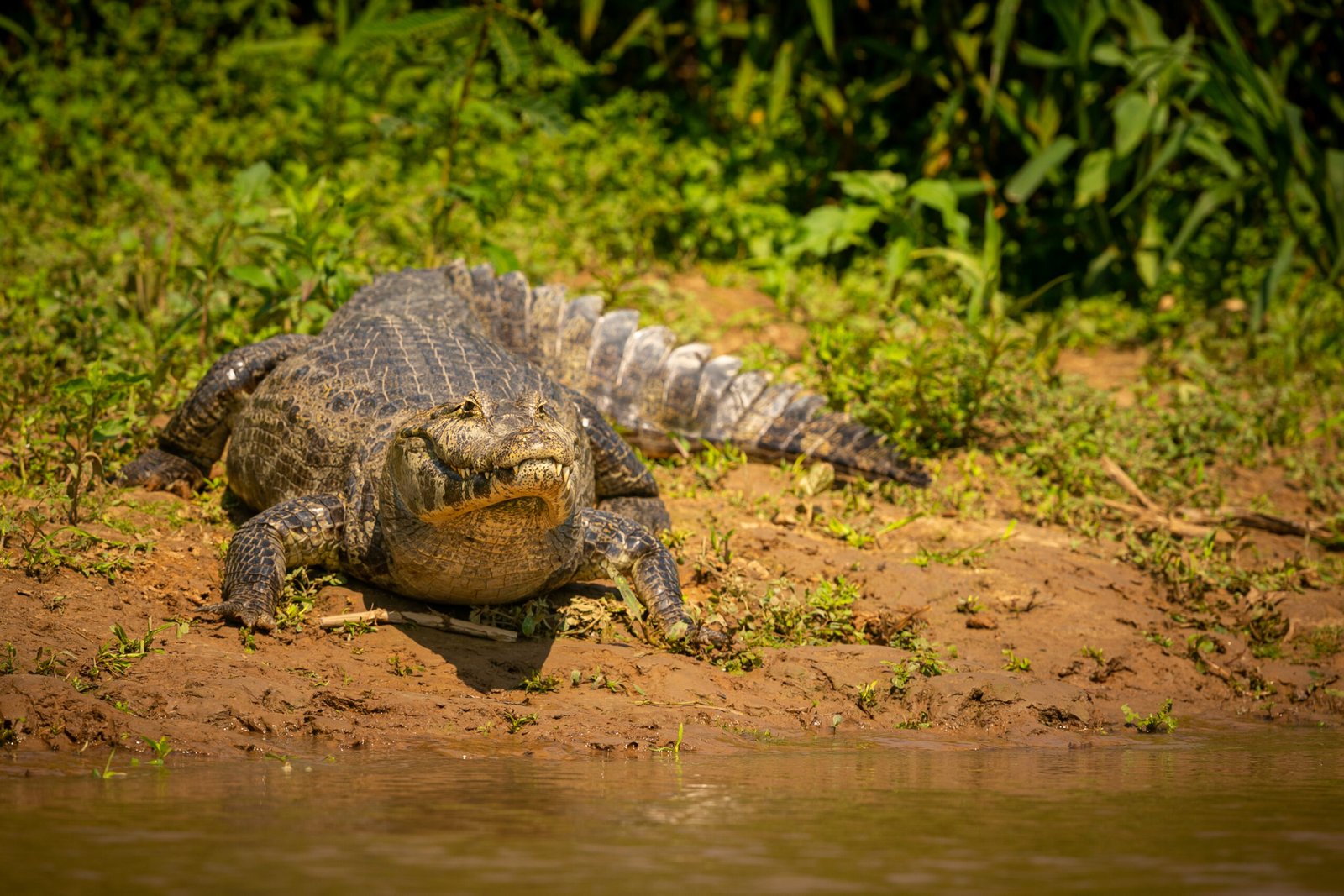
- Yacare-Kaiman: Mit einer geschätzten Population von 10 Millionen Individuen dominieren sie die Flussufer und Buchten.
- Riesenotter: Sie sind als “Flusswölfe” bekannt, bilden lautstarke Familiengruppen und sind äußerst geschickte Fischer.
- Capybara und Sumpfhirsch: Die großen Pflanzenfresser, die die Ebenen und Sumpfgebiete durchstreifen.
Der Wasserkreislauf: Trocken- und Regenzeit im Pantanal
Um die Dynamik der Region zu verstehen, ist es entscheidend zu wissen, dass es keine traditionellen vier Jahreszeiten gibt, sondern vielmehr zwei maßgebliche Phasen: die Trockenzeit und die Regenzeit (Hochwasserzeit).
Trockenzeit (Mai bis Oktober)
Dies ist die ideale Zeit für Ökotourismus und Safaris. Wenn die Ebenen austrocknen, werden die verbliebenen Flüsse und Wasserstellen zu den einzigen Wasserquellen, sodass sich Säugetiere und Reptilien an deren Ufern versammeln müssen. Es ist die Die beste Zeit, um Tiere im Pantanal zu beobachten, insbesondere Jaguare.
Regenzeit (November bis April)
Der Regen verwandelt die Felder in ein Meer aus kristallklarem Wasser, das mit riesigen Seerosen übersät ist. Säugetiere ziehen in höher gelegene Gebiete (Gebirgsketten), doch die Landschaft wird zu einem Spektakel aus Wasserpflanzen, und der Himmel wird von Brutvögeln beherrscht.
💡 Erhaltung von Biomen
Trotz seiner Pracht ist das Pantanal steht unter starkem Druck. Praktiken wie illegale Abholzung an den Oberläufen der Flüsse und die jüngsten historischen Waldbrände bedrohen den empfindlichen Lebensrhythmus der Gewässer. Die Förderung eines nachhaltigen Tourismus ist eine der direktesten Möglichkeiten, dieses Schutzgebiet zu erhalten, da dadurch wirtschaftlich deutlich wird, dass ein intakter Wald mehr wert ist als ein abgeholzter.
Ökotourismus im Pantanal: Nachhaltig reisen
Nachhaltiger Ökotourismus ist der Schlüssel zum Schutz der Tierwelt. Nehmen Sie an Fotosafaris und ethisch verantwortungsvollen Touren mit Yara Eco Safari teil und tragen Sie so zum Schutz der Biome und zur Unterstützung lokaler Gemeinschaften bei.
Häufig gestellte Fragen (FAQ) zum Pantanal
Es handelt sich um eines der größten zusammenhängenden Überschwemmungsgebiete der Erde. Dieses brasilianische Biom zeichnet sich durch den saisonalen Wechsel von Überschwemmungen und Dürreperioden aus, beherbergt eine einzigartige Artenvielfalt und fungiert als riesiges natürliches Süßwasserreservoir.
Zu den bekanntesten Tierarten zählen der Jaguar, der Jabiru-Storch, der Yacare-Kaiman, der Hyazinthara, der Tapir, der Riesenotter und das Capybara. Das Biom ist weltberühmt dafür, wie leicht und häufig diese Tiere in freier Wildbahn gesichtet werden können.
Die wichtigsten Flugverbindungen sind die Stadt Cuiabá (MT), die den Zugang zur Transpantaneira-Autobahn im nördlichen Pantanal ermöglicht, sowie Corumbá/Campo Grande (MS), die den Zugang zur Estrada Parque und zum südlichen Pantanal bieten.
Auf jeden Fall. Geführte Safaris mit professionellen Guides in Booten oder Geländewagen sind die intensivste, sicherste und nachhaltigste Art, die Gegend zu erkunden, und garantieren unglaubliche Begegnungen mit Großkatzen und seltenen Vögeln.