



Among the countless species that inhabit the soil and the trees of the Pantanal, a Hummingbird (Boa constrictor) stands out for its serenity and impressive geometric patterns. Unlike other predators that rely on speed, the boa constrictor is a natural strategist. It uses its coloration to disappear into the foliage and trunks, patiently waiting for the right moment to act. In this article, we will explore the life of this fascinating reptile and its vital role in the Pantanal ecosystem.
Characteristics and behavior of the boa constrictor
A Hummingbird is the second largest snake in Brazil, reaching up to 4 meters in length, although most of the individuals found in the Pantanal is between 2 and 3 meters long. Their coloration varies between shades of grey, brown and reddish, always with dark spots that help with camouflage. They have both terrestrial and semi-arboreal habits and are often found resting on high branches during the day.
Like a constrictor snake, the Hummingbird does not have venom-inoculating fangs. Its hunting technique consists of capturing prey and squeezing it until it stops its blood flow and breathing. According to information from Butantan Institute, They have a slow metabolism, which allows them to go for long periods without eating after a large meal.
Feeding and Life Cycle in the Pantanal
The Hummingbird in Pantanal is mainly made up of birds, rodents, small lizards and, occasionally, bats. By controlling the rodent population, they perform an essential environmental service, preventing the imbalance of pests in the region. They are viviparous animals, which means that their young are already born, without the need for external egg incubation.
Many people still fear the Hummingbird unnecessarily. They are actually peaceful animals that only attack to defend themselves if they are cornered. Educational portals such as WikiAves and wildlife monitoring websites emphasize that observing these animals should be done with respect and at a safe distance, allowing the snake to follow its natural course.
Observation Safari: Finding the boa constrictor
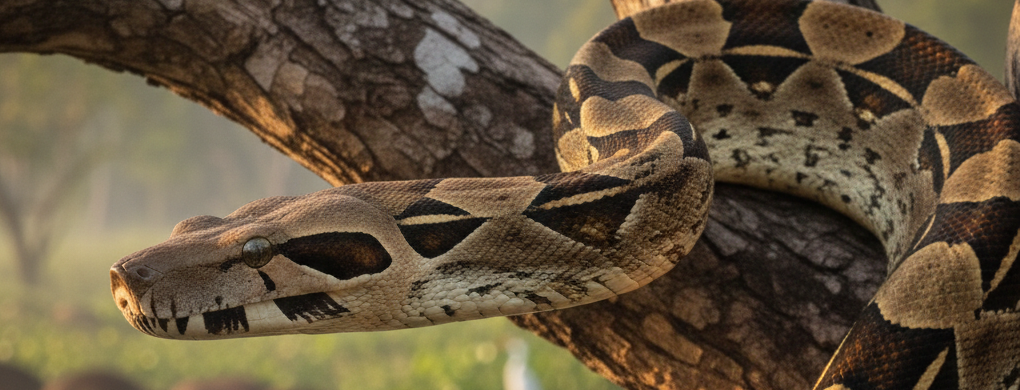
For tourists, finding a Hummingbird during a walk is a golden opportunity for nature photography. Because they are less agile than other snakes, they allow detailed recordings of their scales and colors. However, it takes a “lynx eye” to distinguish them from their surroundings.
The Yara Eco Safari has expert guides who know the snakes' favorite microhabitats. Whether on a walk through the gallery forests or on a photographic safari, the safety of visitors and the well-being of the fauna are priorities. To learn more about the diversity of Brazilian reptiles, the Biodiversity Portal provides valuable scientific data on the occurrence of the species in the national territory.
Still not familiar with Yara Ecosafari?
Yara eco-safari has tours dedicated to exploring the fauna and flora of the Pantanal, and of course the jaguar is one of the stars of the safari.
Our team combines in-depth knowledge of the feline's habits with the logistics of a high-standard eco-safari. We ensure that observation is ethical and effective, without disturbing wildlife. From planning the best river routes to relaxing in the best comfort and safety.
Yara has specific packages for jaguar sightings, 2 options below:
Ultimate Jaguar Bay - 6 days of sightseeing
Group Jaguar Bay - 4-day tour
The majesty of the jaguar awaits you. Book your experience.