


Anatomy of a Specialist: The Giant Anteater’s Design
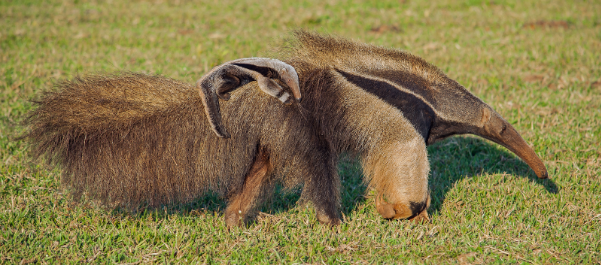
The giant anteater (Myrmecophaga tridactyla) is the largest of the four existing anteater species. It can reach up to two meters in length and weigh up to 45 kilograms. Its most striking feature is its elongated snout, which houses a tongue that can exceed 60 centimeters in length—a perfect tool for its specialized diet.
Unlike other members of the local wildlife, it has no teeth. Its diet consists exclusively of ants and termites, consuming up to 30,000 insects in a single day. Its front claws are extremely strong, serving both to break open sun-hardened termite mounds and to defend itself against predators, such as the jaguar.
Behavior in the Vastness of the Pantanal
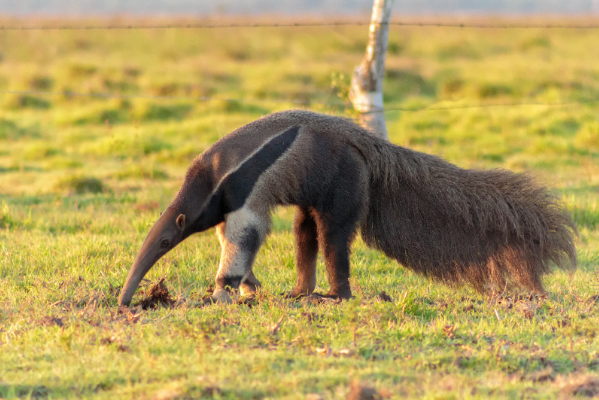
The Pantanal provides the ideal habitat for the giant anteater, mixing open fields with patches of forest where it can seek shelter and shade. It is a predominantly solitary animal, meeting others of its species only during mating season or during the period of mother-and-pup care.
A fascinating detail about this icon of our wildlife is how the female carries her pup on her back for almost a year. The pup’s fur aligns perfectly with the mother’s, creating efficient camouflage against aerial and terrestrial predators. Observing this scene during a safari is a rare privilege that demonstrates the true delicacy of nature.
The Importance of the Anteater for Wildlife Balance
Every species in the Pantanal wildlife plays a vital role. The giant anteater acts as a natural controller of insect populations. By opening termite and ant mounds, it also creates opportunities for birds and small mammals to access food sources that were previously protected.
Unfortunately, the giant anteater is classified as a vulnerable species. Habitat loss and wildfires are constant threats. Therefore, ethical observation tourism, such as that practiced by Yara Eco Safari, is essential. It generates value for the living animal and encourages the preservation of the areas where these giants roam.
How to Safely Observe the Giant Anteater
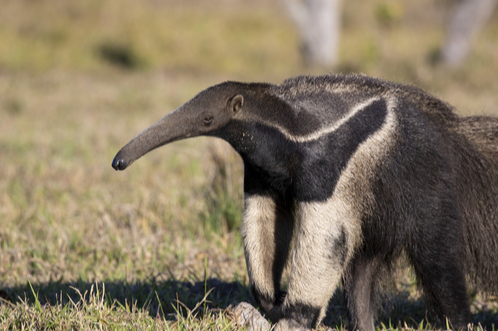
To spot a giant anteater, one needs patience and trained eyes. They have extremely sharp hearing and smell, although their eyesight is not their strongest suit. During our safaris, our guides use silent approach techniques to ensure the animal does not feel cornered and continues its natural behavior.
If you are passionate about nature photography, this animal offers incredible angles, especially during the “golden sunrise” or late afternoon when they tend to be most active. To learn more about how to prepare for this adventure, check out our tips on the giant anteater conservation.
Conclusion: An Unforgettable Encounter
The giant anteater is more than just a curious animal; it is a symbol of the resilience of Brazilian wildlife. Getting to know it up close in the Pantanal is to understand the complexity and beauty of natural evolution.
If you wish to experience this encounter and learn more about the secrets of the Pantanal, book your experience with those who understand conservation and high-standard logistics. The majesty of the wild awaits you.
How do I get to the Pantanal?
Are you wondering how to see the jaguar in its natural habitat? The answer lies in specialized exploration with expertise and respect for the wild.
Yara Eco-Safari offers dedicated tours to explore the rich fauna and flora of the Pantanal, and, naturally, the jaguar is one of the brightest stars of the safari.
Our success in sightings is rooted in our philosophy: Our team combines deep knowledge of the feline’s habits with the logistics of a high-standard eco-safari. We guarantee that observation is both ethical and effective, without disturbing the wildlife. From planning the best fluvial routes to the tranquility of your return for a rest with the utmost comfort and safety.
Yara Eco-Safari offers specific packages dedicated to maximizing jaguar sightings. Choose the option that best fits your adventure style:
Jaguar Express Safari – 4-day tour
Jaguar Essential Safari – 5-day tour
Jaguar Immersive Safari – 6-day tour
Book your experience today.