



Die Jaguar Pantanal Safari ist die Krönung für Reisende, die in die südamerikanische Tierwelt eintauchen wollen. Der Jaguar (Panthera onca) ist mehr als eine Raubkatze; er ist das Symbol für die Kraft und den Überschwang des Pantanals.
Das Porträt der großen amerikanischen Katzendame
Der Jaguar ist der die größte Raubkatze Amerikas. Seine körperlichen Merkmale sind perfekte Anpassungen für das Überleben im Mosaik der Flüsse und Wälder des Pantanal.
1 Der Mantel und seine Rosetten
Das markanteste Merkmal ist sein goldenes Fell mit den Rosetten. Anders als beim Leoparden sind die Rosetten des Jaguars innen mit Flecken beringt. Dieses einzigartige Muster bietet eine tadellose Tarnung und dient als “Fingerabdruck” zur individuellen Identifizierung durch Führer und Forscher.
Wissenschaftliche Einsicht: Die Schwarzer Jaguar (melanistisch) weist ebenfalls Rosetten auf, die aufgrund der hohen Melaninkonzentration nur bei besonderer Beleuchtung sichtbar sind.
2. Struktur und Stärke
Der Körper des Jaguars ist robust, kompakt und extrem muskulös. Seine kurzen Beine und sein großer Kopf verleihen ihm immense Kraft. Im Pantanal, wo es reichlich Beute gibt, können erwachsene Männchen ein beträchtliches Gewicht erreichen, was ihre Dominanz noch verstärkt.
3. Der mächtigste Biss
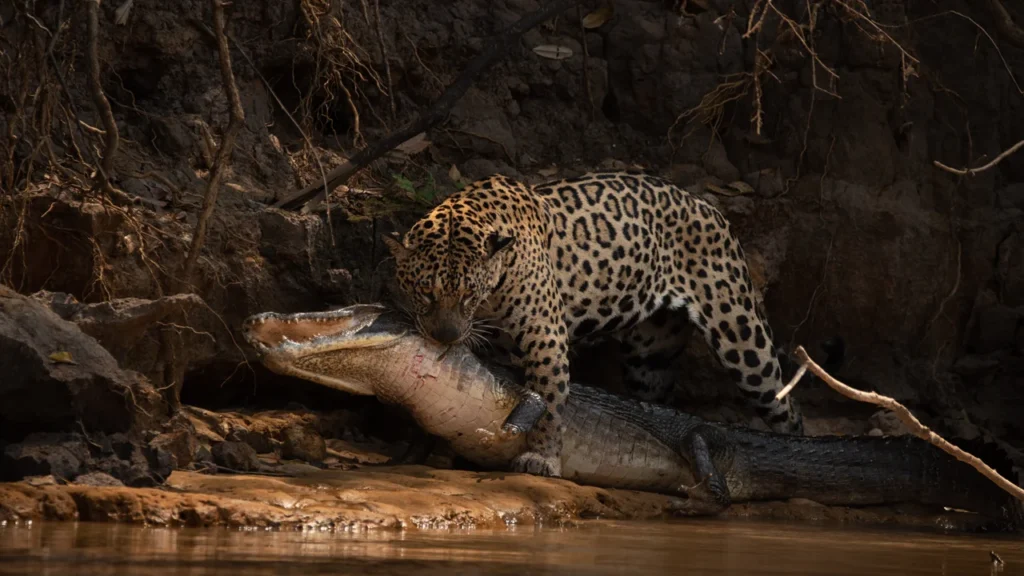
Was ihn wirklich auszeichnet, ist seine Bisskraft. die mächtigste aller Raubkatzen im Verhältnis zu seiner Größe. Diese Anpassung ermöglicht es ihm, den Schädel seiner Beute zu durchbohren, eine effiziente Jagdtaktik, die es ihm ermöglicht, hartschalige Arten zu erlegen wie Kaimane und Gürteltiere.
Lebensgewohnheiten im Herzen des Pantanals
Das Pantanal ist der ideale Lebensraum, der eine riesige Nahrungsquelle bietet. Hier sind seine Gewohnheiten am faszinierendsten und seine Beobachtung am wahrscheinlichsten.
1. Solitär und aquatisch
Der Jaguar ist typischerweise Einsamkeit und hochgradig territorial.
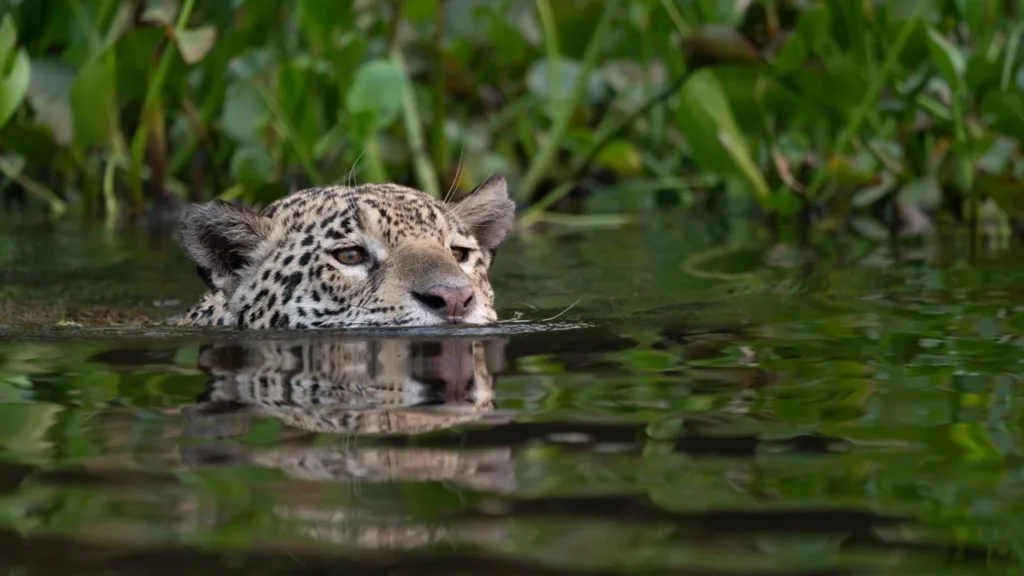
Entscheidend ist, dass es sich um eine hervorragender Schwimmer, Sie bewegen sich leicht zwischen Flüssen und corixos (kleine Kanäle). Diese Anpassung ist wichtig, denn sie ermöglicht es ihm, aquatische Beute zu jagen und Wasserläufe als Wanderwege zu nutzen - und an den Flussufern konzentrieren sich die Beobachtungen.
2. Opportunistischer Jäger
Seine Gewohnheiten sind in der Regel dämmerungsaktiv und nächtlich. In geschützten Pantanal-Gebieten, wie in der Nähe unserer Öko-Safari, kann man sie jedoch immer häufiger bei der Jagd oder beim Ausruhen am Tag beobachten. Ihre Ernährung ist breit gefächert, was ihre ökologische Flexibilität als Spitzenprädator zeigt.
So sehen Sie den Jaguar in seinem natürlichen Lebensraum
Fragen Sie sich wie man den Jaguar in seinem natürlichen Lebensraum sehen kann? Die Antwort liegt in der spezialisierten Erkundung mit Fachwissen und Respekt vor der Natur.
Yara Öko-Safari bietet spezielle Touren an, um die reiche Fauna und Flora des Pantanals zu erkunden, und natürlich ist der Jaguar einer der größten Stars der Safari.
Unser Erfolg bei den Sichtungen beruht auf unserer Philosophie: Unser Team kombiniert genaue Kenntnis der Gewohnheiten der Katze mit der Logistik eines Öko-Safari auf hohem Niveau. Wir garantieren, dass die Beobachtung sowohl ethisch und effektiv, ohne die Tierwelt zu stören. Von der Planung der besten Flussrouten bis zur Ruhe bei der Rückkehr für eine Pause mit dem Höchster Komfort und Sicherheit.
Yara Eco-Safari bietet spezielle Pakete an, um möglichst viele Jaguare zu sehen. Wählen Sie die Option, die am besten zu Ihrem Abenteuerstil passt:
Jaguar Express Safari - 4-tägige Tour
Jaguar Essential Safari - 5-tägige Tour
Jaguar Erlebnissafari - 6-tägige Tour
Die Majestät des Jaguars wartet auf Sie. Buchen Sie Ihr Erlebnis noch heute.